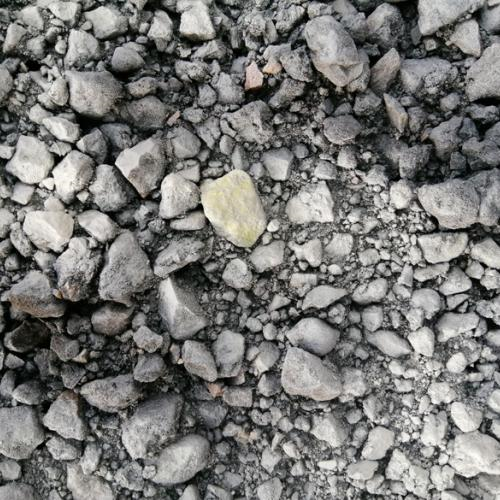
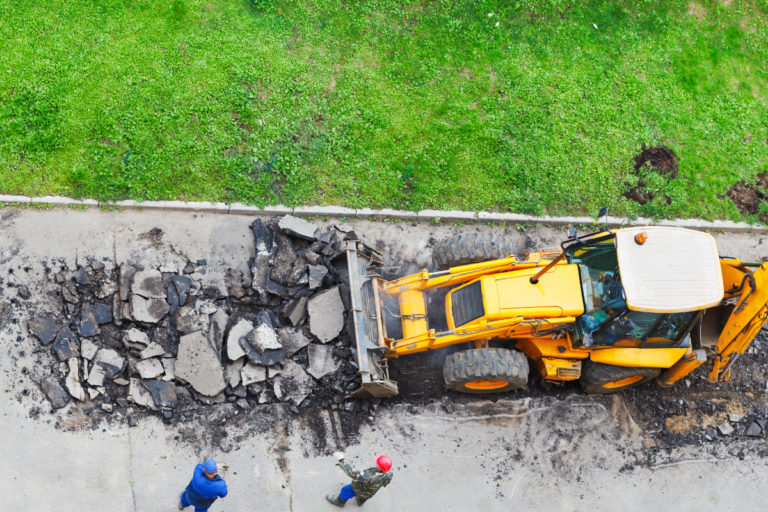
In 2014, Flanders decided to permanently remove tar from the production chain. Asphalt surfaces with tar or pitch bitumen cannot therefore be given a second life in our roads. Or at least not directly. The material must first undergo thermal cleaning before it can safely re-enter the chain. COPRO supervises the monitoring and certification of the removal. This procedure has been digital for almost two years now. An evaluation with COPRO Unit Manager bituminous and related products Dirk Lacaeyse.
COPRO launched the Digitar platform in September 2023. This is an online tool to simplify the procedure for certified removal of tar-containing asphalt. “This was a revolution at the time. Everyone was used to working on paper. But that meant sending things back and forth countless times. It was not efficient and there was often a wait until the right document with the right signatures was available. We wanted to change that by digitising. In the meantime, Digitar has become well established. User feedback speaks of a user-friendly and fast tool. That was our ambition.”
Order consignment notes on time
So the tool does its job well. COPRO used user experience to develop a simple step-by-step plan for each party involved – contractor and client. However, Lacaeyse still emphasises a few points that require attention, starting with ordering consignment notes. “The only step that we have not yet been able to digitise. This could be done, for example, by linking with the digital identification forms that already exist for the transport of removed materials. But for now, processing an order still has to be done manually. The message is therefore to order on time, because these consignment notes must still be delivered by post.” The consignment notes were created at the request of the clients to make the system watertight.
Each load of tar-containing asphalt must be accompanied by a consignment note signed by the client. However, for this to happen, the client must have a supervisor on site, something that is no longer a given these days. It sometimes happens that clients provide blank consignment notes to the contractor. “But that is absolutely not the right way of working,” Lacaeyse is categorical. “This transfer document is precisely intended to monitor the quantities. Without that control it’s pointless. Which is why it is important to also make that last manual step digital in the long term.”


Estimate maximum quantity with sufficient margin
In addition, the maximum amount of material to be removed often requires additional work at the intermediate storage location. “When calculating, the client usually assumes the theoretical minimum. In practice, milling will always have to go a little deeper to remove all the tar-containing material. However, the quantity specified by the client may not be exceeded.” If this does happen, the contractor must report back to the client. “Fortunately, this can be done a lot faster digitally. However, it is important to carefully monitor the quantities during milling and, if necessary, increase the maximum in time to avoid a temporary stop to the removal,” says Lacaeyse. He does have a tip to make it more workable. “I recommend building in a slightly larger margin at the start of the project. There are no negative consequences associated with this.”


Close work site in the tool
Lacaeyse adds a third point of attention, specifically for clients: the closing. “The intention is that once the last truck with tar-containing asphalt has left the site, the client will close its project in Digitar. Only then can a certificate actually be drawn up, on the basis of which the contractor will be paid.
“The preparation of these certificates is already being done from one of the ten intermediate storage locations in Flanders in this phase and not only after the materials have been thermally cleaned. “Because we first collect sufficient volume there before taking the material to one of the thermal cleaners in the Netherlands. This can take up to a year. We do not want to make the contractor wait that long for payment.”
Still work to be done
It’s clear that there is still more than enough work to be done in the coming years to remove all the tar-containing waste. “But we don’t have exact figures. We do know that an average of 100,000 tonnes per year is disposed of under certificate. This is expected to remain the case for several years to come, as tar is still present in foundations where it was previously given a second life. After that, we expect a tipping point, where the volume of tar-containing material should decrease year after year,” Lacaeyse concludes.
This article appeared in the magazine RecyclePro.