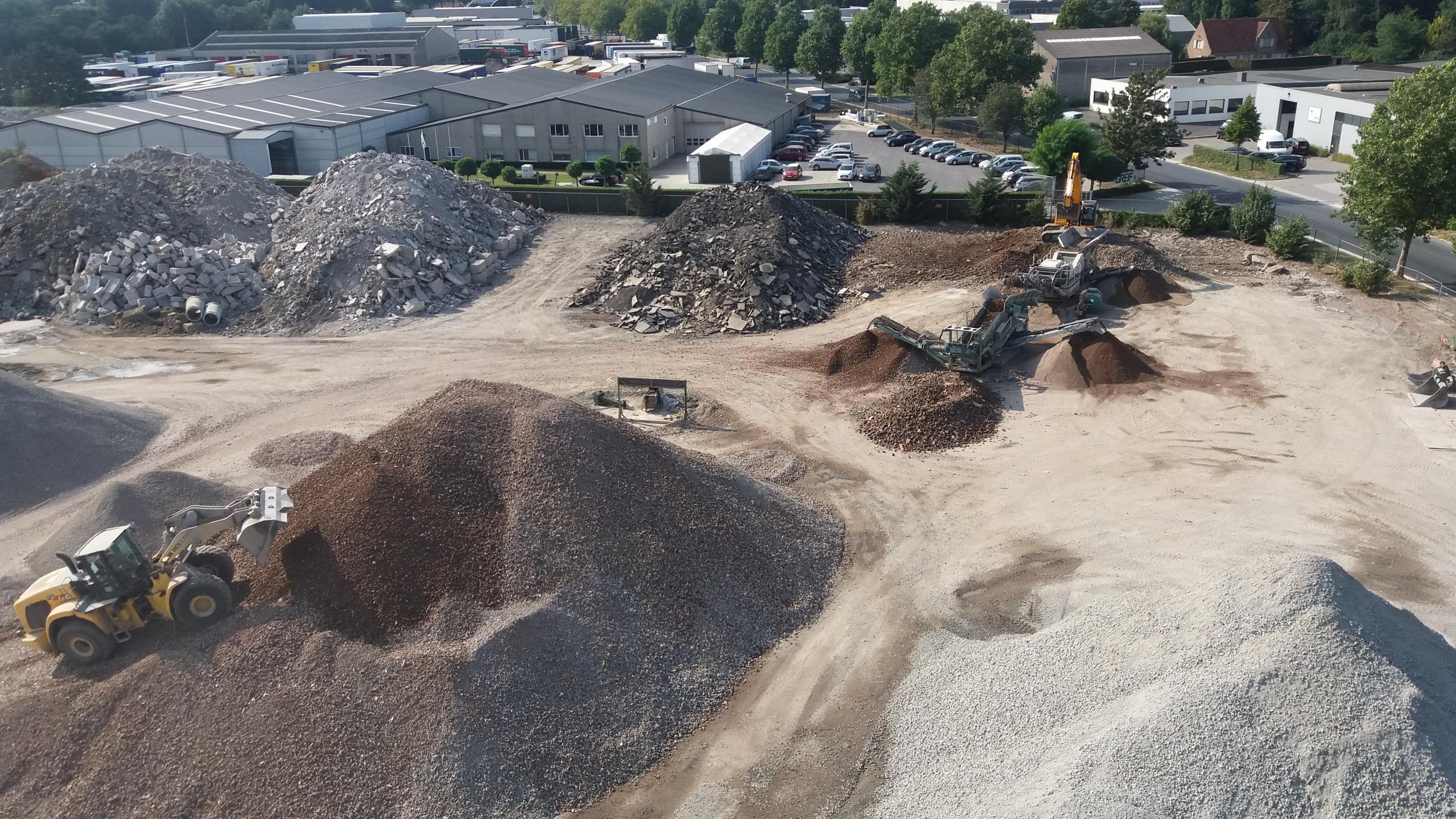
The construction sector and the government are increasingly focusing on circular aggregates as an alternative to primary aggregates. Not only for reasons of sustainability, but also due to the decreasing availability of primary materials. Pieter Keppens, Unit Manager at COPRO, explains how certification of different types of circular aggregates, depending on their application, creates confidence in their quality.
In Flanders, approximately 15 million tonnes of construction rubble is recycled annually into aggregates with a recycling percentage of more than 98%. In most cases, these mixed aggregates or concrete aggregates are used in the foundations of roads and industrial buildings.

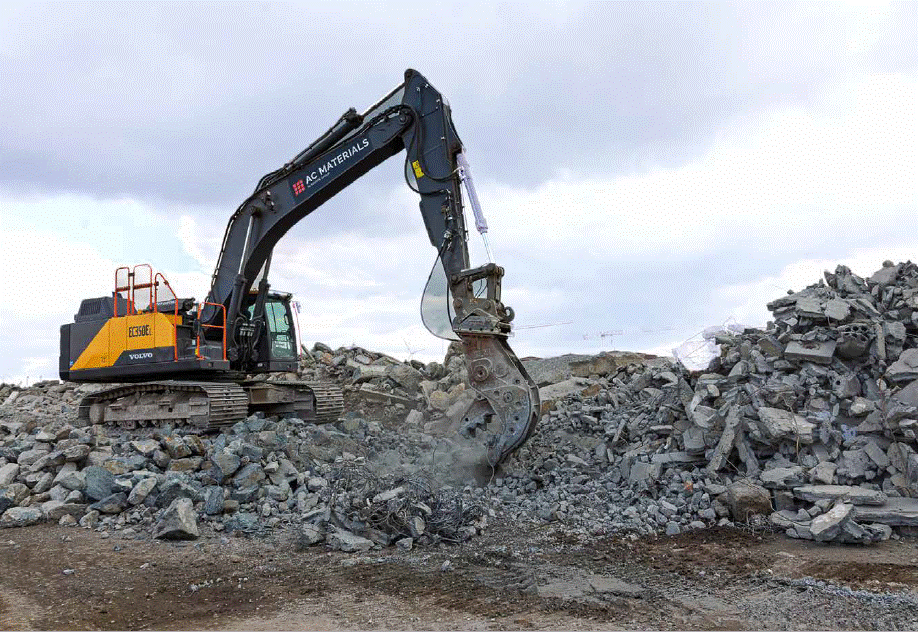
The general goal is to use high-quality waste streams as much as possible in a circular manner or in high-quality applications”, explains Pieter Keppens.
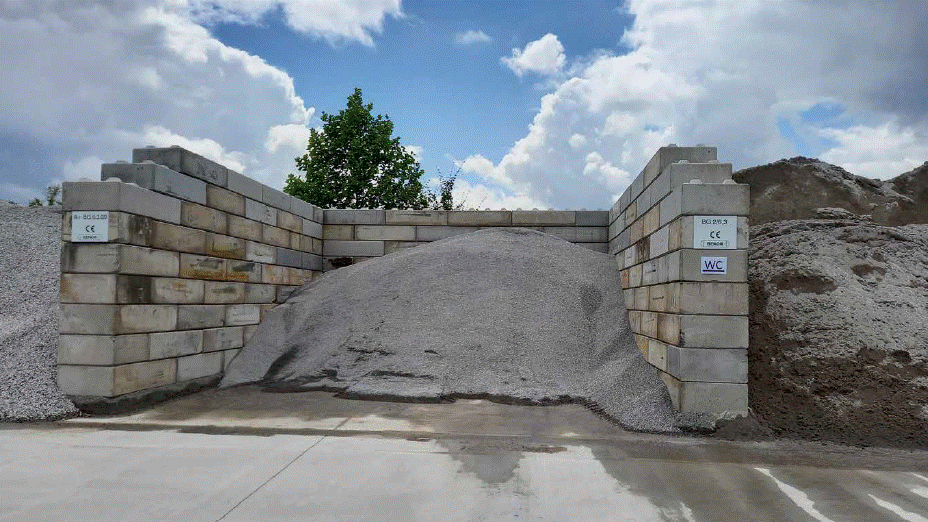
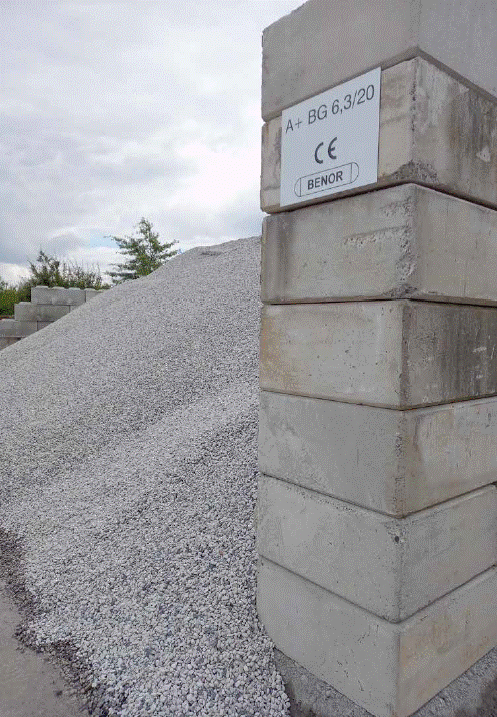
COPRO certifies the A+ concrete aggregate with the BENOR quality label that is circularly reused in concrete. In this way, old concrete is reprocessed into new concrete, instead of recycling concrete aggregate into a foundation. The high-quality sand fraction, produced during the crushing of concrete into concrete aggregate, can also soon be reused in new road concrete according to Standard Specifications 250.
By using other high-quality aggregates such as mixed aggregates or other circular materials in road foundation layers, concrete aggregates also become more available for a circular application in concrete. After processing secondary building materials, such as bottom ash, railway ballast, and non-ferrous slag in a suitable installation, COPRO certifies the environmental and construction quality of these aggregates. These are increasingly used for high-quality road foundations and even applications in concrete or asphalt.

A good example of a 100% circular application: reclaimed asphalt, which is released during the milling of old asphalt layers, is circularly reused in the production of new asphalt, good for more than a million tonnes of COPRO-certified asphalt aggregate per year.
CIRCULAR SAND AS ANSWER
In addition, contaminated soil and similar waste flows are cleaned to produce more than 260,000 tonnes of physically and chemically cleaned sand annually, which is reused in construction. In addition to sustainability, the impending shortage of sand also plays a role. “Sand extraction from the North Sea is limited because this sand is essential for our coastal defence”, says Pieter Keppens. In addition, many operating permits for sand quarries in the Netherlands and Germany are expiring, further limiting the availability of new sand for construction in the coming years.
The solution? Circular sand from soil and waste flows that is certified for both environmental hygiene and construction properties. Pieter Keppens: “This is where COPRO’s strength lies. We certify not only in the context of environmental legislation, but also with regard to the technical suitability for specific applications in construction.”

COOPERATION THROUGHOUT THE CHAIN

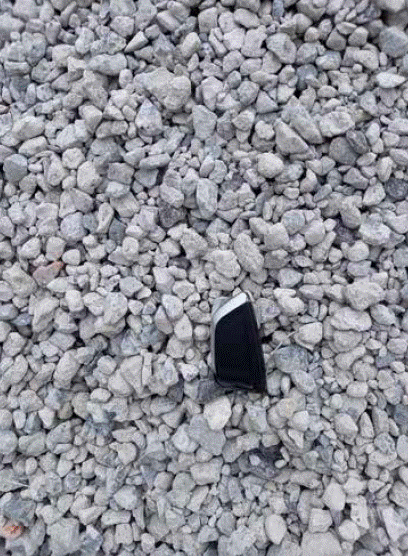
Collaboration between the different parties is the key to a successful circular approach. “The ecosystem must function well both upstream and downstream”, explains Pieter Keppens.
“This means that producers of circular aggregates, private and public clients, contractors and certification bodies work together to use circular building materials in new construction projects at the highest possible quality.”
The VLAIO (Flanders Innovation & Entrepreneurship) Living Lab Circular Concrete project focuses on the use of circular concrete in Flanders and investigates how the supply and demand of circular concrete can be further aligned. As a certification body for circular materials, COPRO actively participates as a partner, and together with other certification bodies has developed the ‘innovation certificate’.
The innovation certificate inserts a pragmatic intermediate step between new innovative products and certification of standardised products. This allows innovative construction products and systems, such as circular materials, to be deployed in construction projects more quickly and with confidence.
This article also appears in Grond Weg Waterbouw.